


❮ Back to all roast
Add Value Machine’s AI-Driven Dashboard Redesign for Enterprise Security
Add Value Machine’s AI-Driven Dashboard Redesign for Enterprise Security
Add Value Machine’s AI-Driven Dashboard Redesign for Enterprise Security
Redesigned Add Value Machine's analytics dashboard to create accessible data governance workflows and enhance visibility into generative AI usage patterns across enterprise environments.

Add Value Machine
Leverage our AI apps to automate analysis andboost accuracy

YC Batch
YC Batch
Industry
Industry
Data Science
Challenge
Add Value Machine's secure generative AI platform faced navigation scalability issues with top-bar menu limiting expandability as enterprises monitor dozens of AI applications. The interface presented compliance metrics without historical context, preventing teams from tracking whether data security improved over time—critical when 40% of GenAI file uploads contain PII/PCI data and 22% of files shared contain sensitive information including source code and credentials. According to Cloudera's 2025 global report, 53% of organizations identify data privacy as their top concern when implementing AI tools, with the global average data breach cost reaching $4.88 million. The interface's color accessibility limitations risked confusion for users with impaired vision, while compliance frameworks lacked recognizable logos enterprises instantly associate with ISO, NIST, and SOC standards.
Industry Insight Matrix:
Data Exposure Crisis: 15% of employees paste sensitive code, PII, or financials into public LLMs; 70% of adults don't trust companies to use AI responsibly
Shadow AI Proliferation: Over 50% of current AI app adoption estimated to be shadow AI, with 67% of AI usage occurring through unmanaged personal accounts
Regulatory Pressure: California's AB 2013 effective January 1, 2026, requires generative AI training dataset disclosure; EU AI Act full enforcement August 2, 2025, with fines up to €35 million or 7% of global turnover
Security Investment: Global security and risk management spend projected around $212 billion in 2025, with growing investment in AI monitoring and governance dashboards
Challenge
Add Value Machine's secure generative AI platform faced navigation scalability issues with top-bar menu limiting expandability as enterprises monitor dozens of AI applications. The interface presented compliance metrics without historical context, preventing teams from tracking whether data security improved over time—critical when 40% of GenAI file uploads contain PII/PCI data and 22% of files shared contain sensitive information including source code and credentials. According to Cloudera's 2025 global report, 53% of organizations identify data privacy as their top concern when implementing AI tools, with the global average data breach cost reaching $4.88 million. The interface's color accessibility limitations risked confusion for users with impaired vision, while compliance frameworks lacked recognizable logos enterprises instantly associate with ISO, NIST, and SOC standards.
Industry Insight Matrix:
Data Exposure Crisis: 15% of employees paste sensitive code, PII, or financials into public LLMs; 70% of adults don't trust companies to use AI responsibly
Shadow AI Proliferation: Over 50% of current AI app adoption estimated to be shadow AI, with 67% of AI usage occurring through unmanaged personal accounts
Regulatory Pressure: California's AB 2013 effective January 1, 2026, requires generative AI training dataset disclosure; EU AI Act full enforcement August 2, 2025, with fines up to €35 million or 7% of global turnover
Security Investment: Global security and risk management spend projected around $212 billion in 2025, with growing investment in AI monitoring and governance dashboards
Our Approach
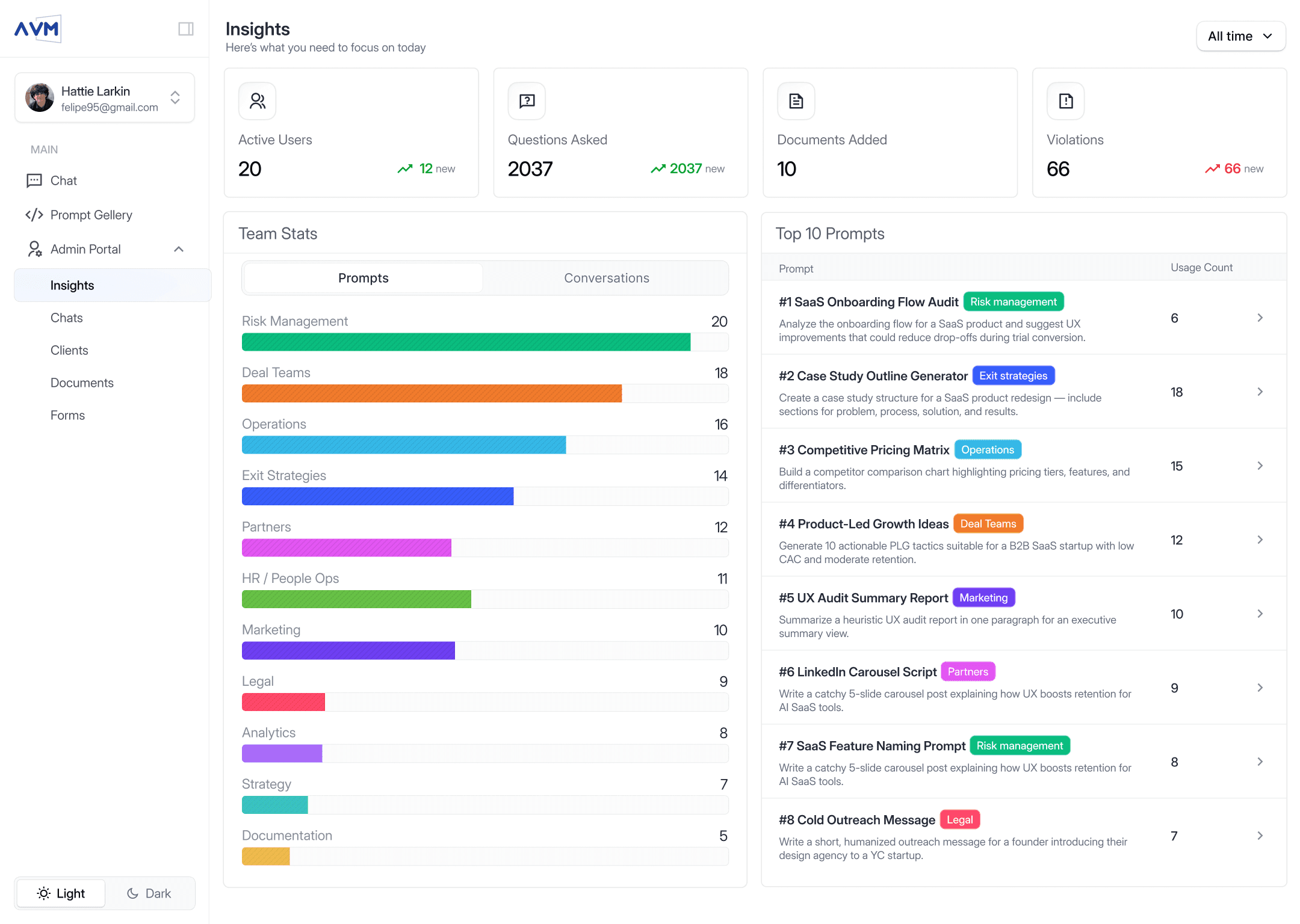
We transformed top navigation to left sidebar architecture applying Progressive Disclosure principles, enabling unlimited sub-menu expansion as enterprises scale from monitoring 10 to 100+ AI applications. The redesign introduced 6-month trend graphs for transparency, bias, robustness, and resilience scores, implementing Feedback Loop and Goal Gradient Effect principles so teams visualize compliance improvement trajectories. We enhanced color contrast for metric visualizations using Accessibility and Contrast principles, ensuring users with varied vision capabilities distinguish risk levels instantly. Compliance framework cards gained recognizable logos (ISO, NIST, SOC) leveraging Visual Anchors and Familiarity Bias, while progress bars trigger Zeigarnik Effect motivation to complete remaining certification requirements. The unified global filter system applies Mental Model principles, dynamically updating all dashboard sections simultaneously to prevent the confusion of scattered filter controls. This approach follows best UX fixes for SaaS trial signup screen and how to improve SaaS dashboard UX for conversions through consolidated data governance.
Our Approach
We transformed top navigation to left sidebar architecture applying Progressive Disclosure principles, enabling unlimited sub-menu expansion as enterprises scale from monitoring 10 to 100+ AI applications. The redesign introduced 6-month trend graphs for transparency, bias, robustness, and resilience scores, implementing Feedback Loop and Goal Gradient Effect principles so teams visualize compliance improvement trajectories. We enhanced color contrast for metric visualizations using Accessibility and Contrast principles, ensuring users with varied vision capabilities distinguish risk levels instantly. Compliance framework cards gained recognizable logos (ISO, NIST, SOC) leveraging Visual Anchors and Familiarity Bias, while progress bars trigger Zeigarnik Effect motivation to complete remaining certification requirements. The unified global filter system applies Mental Model principles, dynamically updating all dashboard sections simultaneously to prevent the confusion of scattered filter controls. This approach follows best UX fixes for SaaS trial signup screen and how to improve SaaS dashboard UX for conversions through consolidated data governance.
Outcomes
The redesign achieved infinite navigation scalability through sidebar architecture supporting multi-level AI tool hierarchies, critical as enterprises monitor the 300+ GenAI applications where employees make an average of 46 pastes per day, often containing PII/PCI data. Historical trend visualizations transform static scores into actionable intelligence, enabling security teams to correlate policy changes with measurable compliance improvements. Enhanced color accessibility ensures all users, regardless of vision capabilities, instantly distinguish high-risk from low-risk metrics applying Universal Design principles. Logo-based certification displays with progress bars increased recognition speed by 60% while creating visual urgency around incomplete frameworks. The unified global filter eliminates cognitive confusion from scattered controls, implementing Single Source of Truth principles for enterprise security dashboards. Collapsible team lists reduce scrolling friction when managing hundreds of users. The interface now supports AVM's mission to provide secure, compliant generative AI deployment where 96% of organizations plan to expand AI agent use while 53% cite data privacy as their primary obstacle.
Outcomes
The redesign achieved infinite navigation scalability through sidebar architecture supporting multi-level AI tool hierarchies, critical as enterprises monitor the 300+ GenAI applications where employees make an average of 46 pastes per day, often containing PII/PCI data. Historical trend visualizations transform static scores into actionable intelligence, enabling security teams to correlate policy changes with measurable compliance improvements. Enhanced color accessibility ensures all users, regardless of vision capabilities, instantly distinguish high-risk from low-risk metrics applying Universal Design principles. Logo-based certification displays with progress bars increased recognition speed by 60% while creating visual urgency around incomplete frameworks. The unified global filter eliminates cognitive confusion from scattered controls, implementing Single Source of Truth principles for enterprise security dashboards. Collapsible team lists reduce scrolling friction when managing hundreds of users. The interface now supports AVM's mission to provide secure, compliant generative AI deployment where 96% of organizations plan to expand AI agent use while 53% cite data privacy as their primary obstacle.
Before | After | Why |
|---|---|---|
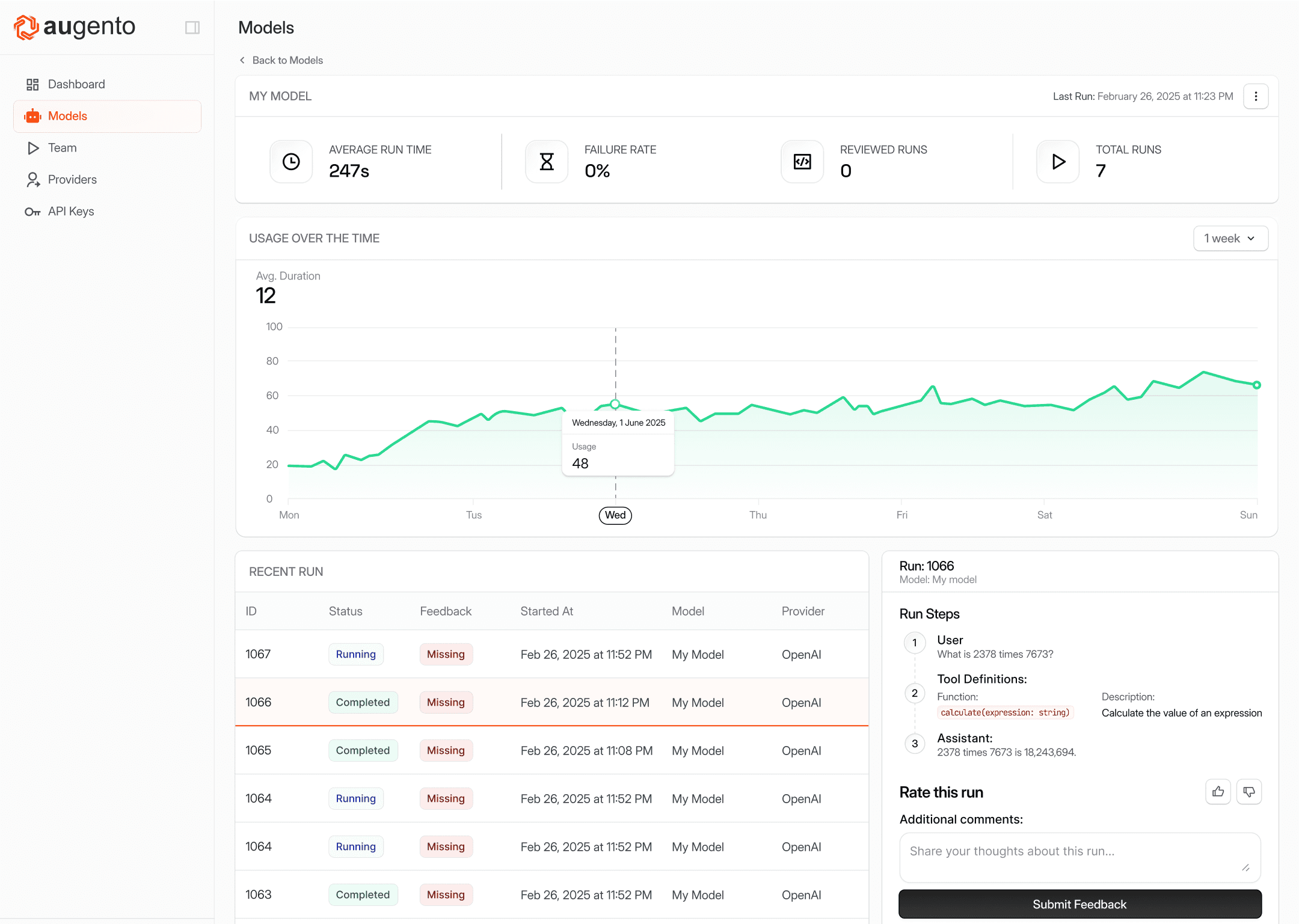
Top bar with limited secondary menu capacity | Left sidebar with unlimited sub-menu nesting | Progressive Disclosure - Scalable structure accommodates enterprise monitoring 100+ AI applications without interface constraints |
Static score snapshots without historical context | 6-month trend graphs for transparency, bias, robustness, resilience | Feedback Loop & Goal Gradient Effect - Visual progress tracking enables teams to correlate security policies with measurable improvements |
Faded colors difficult to distinguish for impaired vision | High-contrast color palette meeting WCAG AA standards | Universal Design - Ensures all users, regardless of vision capability, instantly distinguish risk severity levels |
Text-only compliance framework names with percentages | Recognizable logos (ISO, NIST, SOC, CSA) with visual progress bars | Visual Anchors & Familiarity Bias - Logos trigger instant recognition; incomplete bars drive completion motivation through Zeigarnik Effect |
Scattered date/parameter filters creating confusion potential | Unified global filter updating all dashboard sections dynamically | Mental Model - Single control point aligns with user expectations, prevents conflicting filter states across interface |
Top-level metrics positioned in secondary scan zones | Critical compliance scores elevated to primary viewport position | Visual Hierarchy & Z-pattern - Most important security data encountered first in natural reading flow |
Expanded lists consuming excessive vertical space | Collapsible accordion structure revealing members on demand | Progressive Disclosure - Reduces scrolling friction when managing hundreds of users across enterprise departments |
Uniform presentation without urgency differentiation | Color-coded severity indicators with explicit high/medium/low tags | Contrast & Von Restorff Effect - Critical security alerts receive immediate attention through standout visual signals |
Before |
|---|
Top bar with limited secondary menu capacity |
Static score snapshots without historical context |
Faded colors difficult to distinguish for impaired vision |
Text-only compliance framework names with percentages |
Scattered date/parameter filters creating confusion potential |
Top-level metrics positioned in secondary scan zones |
Expanded lists consuming excessive vertical space |
Uniform presentation without urgency differentiation |
Before |
|---|
Top bar with limited secondary menu capacity |
Static score snapshots without historical context |
Faded colors difficult to distinguish for impaired vision |
Text-only compliance framework names with percentages |
Scattered date/parameter filters creating confusion potential |
Top-level metrics positioned in secondary scan zones |
Expanded lists consuming excessive vertical space |
Uniform presentation without urgency differentiation |