


Last Update:
Feb 26, 2026
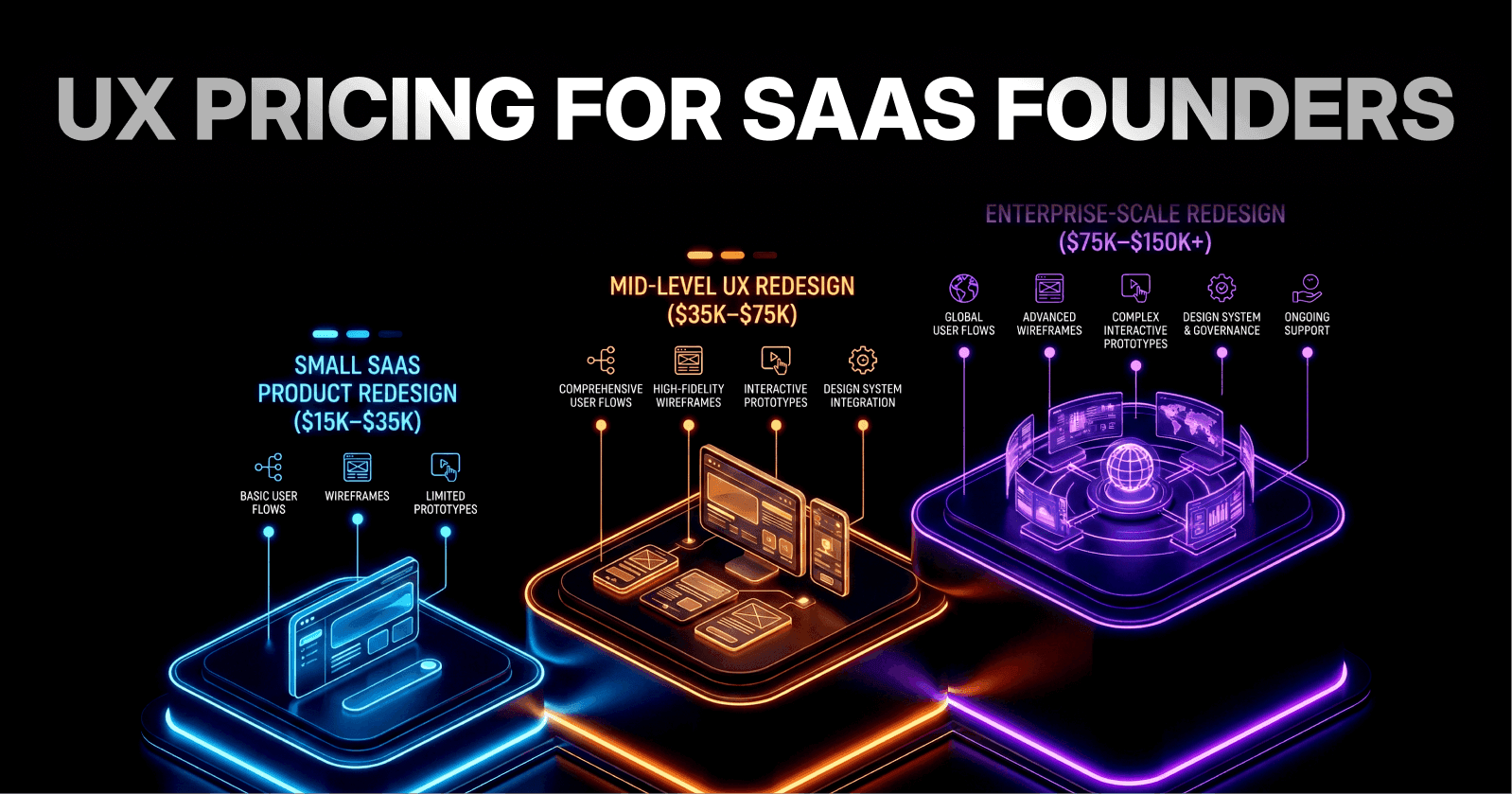
Table of Contents
No headings found in Blog Content.
Share

UX Redesign Pricing:
Small SaaS Redesign: $15,000 – $35,000
Mid-Level Redesign (Onboarding, Features, Scalability): $35,000 – $75,000
Enterprise Redesign (Full Overhaul, Cross-Functional UX): $75,000 – $150,000+
Freelancers: $75 – $175/hr, Agencies: $150 – $300+/hr, Ongoing Retainers: $12,000 – $30,000/month.
Key Factors Influencing Costs:
Project scope, user research, design strategy, and deliverables (wireframes, prototypes, design systems) all play a role in determining the cost of a redesign.
Investing in user research & discovery ensures the redesign directly addresses pain points and needs, reducing costly mistakes in the future.
Why Fixed Pricing Works:
Saasfactor uses a fixed-price, fixed-timeframe model to eliminate scope creep, ensure accountability, and provide clarity to both clients and designers.
Impact of UX Redesign on SaaS Revenue:
A successful UX redesign can boost conversions by 100%, improve customer retention by 200%, and lead to significant increases in MRR (Monthly Recurring Revenue) and LTV (Lifetime Value).
McKinsey research shows that design-led companies outperform competitors by 2:1 in revenue growth.
When SaaS founders think about investing in a UX redesign, understanding the cost breakdown is crucial. At Saasfactor, we believe in a fixed-price, fixed-timeframe approach to ensure no feature creep, no loose commitments, and a clear, agreed-upon timeline for both founders and designers. This method ensures that both parties have full clarity on what to expect and how the project will proceed.
In this guide, we'll break down typical UX redesign costs, key factors driving these costs, and provide pricing insights that will help you budget effectively for your next SaaS product redesign.
Typical UX Redesign Pricing for SaaS (2026)
Professional UX agencies generally offer higher pricing due to the expertise, talent, and value provided. Here's a breakdown of typical costs:
Fixed Project Pricing
Small SaaS Product or Feature Redesign: $15,000 – $35,000
Focus on improving onboarding flows, activation processes, and key feature enhancements. According to Nielsen Norman Group research, improving usability can yield ROI of up to 135% for digital products.
Mid-Level UX Redesign (Onboarding, Core Features, Scalability): $35,000 – $75,000
Involves full redesigns for user journeys, scalability, and reducing churn. This level of UX optimization typically addresses multiple product areas and user touchpoints.
Enterprise-Scale Redesign (Full Product Overhaul, Cross-Functional UX): $75,000 – $150,000+
Typically covers large SaaS products with complex flows, multiple stakeholders, and cross-platform designs. Forrester Research indicates that every dollar invested in UX brings $100 in return, with an ROI of 9,900%.
Hourly & Retainer Rates
Freelancers or Independent Designers: $75 – $175/hr
Ideal for smaller projects with clear, well-defined scope and short timelines.
Agencies with a Dedicated Team: $150 – $300+/hr
For larger teams handling comprehensive design work, user research, and testing. Learn more about our comprehensive product design services.
Long-Term Retainers (Ongoing UX Optimization)
Monthly UX Optimization Retainers: $12,000 – $30,000/month
For growing SaaS companies needing continuous design improvements, A/B testing, and feature iterations. This model works well for companies committed to ongoing UX optimization.
Why Saasfactor's Fixed Project Model Works Best
At Saasfactor, we use a fixed-price, fixed-timeframe approach for all our redesign projects. We ensure clear deliverables and a set project scope to avoid the common pitfalls of UX redesigns:
No Feature Creep
The scope is defined upfront, preventing unnecessary additions to the project that extend timelines and increase costs. Project Management Institute research shows that scope creep is one of the leading causes of project failure.
No Loose Commitment
Both founders and designers agree on milestones, timelines, and outcomes, ensuring focus and accountability.
Realistic Timelines
By committing to a fixed timeframe, we prevent delays and ensure that the project moves forward efficiently.
This approach gives both parties peace of mind and ensures that the project stays on track.
Why Hiring Freelancers on an Hourly Basis Isn't Ideal for UX Redesign
While it might seem tempting to hire freelance UX designers or independent designers based on hourly rates (ranging from $75 to $175/hr), this approach can have significant downsides when it comes to SaaS product redesigns, especially for improving onboarding and conversion.
Here's why it's not the best fit:
1. Limited Expertise in Key Areas
A proper SaaS redesign often requires a range of specialized expertise — including UX designers, UX researchers, UI designers, and interaction designers. Freelancers, especially those working alone, may not have the comprehensive skill set needed to handle complex redesigns that require cross-disciplinary collaboration. Smashing Magazine emphasizes the importance of collaborative design teams for successful product redesigns.
2. Lack of Project Management
Freelancers often work in isolation and might not have the project management skills to ensure that a redesign project stays on track. This increases the risk of delayed timelines, miscommunication, and scope creep. When redesigning a core SaaS product, a fixed project approach with an agency ensures proper planning, milestone tracking, and communication.
3. Inconsistent Results
Freelancers may not be able to provide the consistency and alignment needed across all areas of the product redesign. Without an in-house team or agency working together, your product redesign may lack cohesion in user flows, visual design, and usability — ultimately leading to poor results.
4. Risk of Over-Budgeting
Hourly billing can easily go over budget if the project scope isn't defined clearly. Freelancers may charge for every small iteration or revision, and this can add up quickly, especially in complex redesigns with multiple features to address. Toptal's analysis shows that fixed-price contracts often provide better budget predictability for design projects.
5. Lack of Accountability
With fixed pricing and an agency team, you're guaranteed accountability and a clear path to completion. Freelancers often lack the formal accountability and collaborative environment of an agency team that keeps the redesign on track, ensuring that both the founder and the designers stay committed to the agreed outcomes.
Key Factors Driving UX Redesign Costs
Several factors influence the overall cost of a UX redesign, particularly for SaaS businesses:
1. Project Scope and Complexity
The more complex the redesign, the higher the cost. Redesigning onboarding, core workflows, or even a full product overhaul increases the time and expertise needed. Interaction Design Foundation provides excellent resources on understanding UX complexity.
2. User Research & Discovery
User research is often the first step in a UX redesign. It involves user interviews, journey mapping, personas, and analytics. These upfront costs ensure a tailored redesign that directly addresses user pain points and needs. Our UX audit services provide comprehensive user research and discovery.
3. Design Strategy & Deliverables
UX strategy is key in aligning design goals with business objectives. Deliverables can include wireframes, prototypes, and design systems that ensure consistency across all touchpoints. According to U.S. Web Design System, mature design systems significantly reduce development time and costs.
What to Expect From Saasfactor's UX Redesign Projects
When you choose Saasfactor, you can expect a transparent, results-driven process:
1. Initial Discovery & Research
We dive into user pain points, existing flows, and product goals to create a user-centered strategy. Our comprehensive UX audit process uncovers hidden opportunities for improvement.
2. Design & Prototype
A clear, functional design that aligns with your business needs and user expectations. Expect interactive prototypes and wireframes for all core features. Industry best practices show that interactive prototypes reduce development errors by up to 50%.
3. Testing & Refinement
We conduct thorough usability testing, refining the design based on feedback to ensure it delivers tangible results. Usability.gov provides excellent guidelines on effective usability testing methodologies.
4. Handover & Collaboration
We work closely with your development team to ensure a smooth transition from design to implementation.
5. Post-Launch Monitoring
After launch, we provide ongoing support to analyze user data, ensuring continuous optimization.
How Much Can UX Redesign Impact Your SaaS Revenue?
ROI of UX Design is critical for SaaS founders. UX improvements can result in:
Higher conversion rates (from trial to paying user)
Better customer retention (reducing churn)
Increased MRR and LTV
Market Stats:
A proper UX overhaul can boost conversions by 100% for SaaS products. (GalaxyUX Studio)
Companies that prioritize UX design see up to 200% increase in customer retention. (Design Studio UIUX)
McKinsey research shows that design-led companies outperform industry benchmarks by as much as 2:1 in revenue growth.
At Saasfactor, we've seen firsthand how effective UX design directly impacts revenue growth, helping SaaS companies achieve significant improvements in user acquisition, engagement, and retention. Read more success stories on our blog.
Summary: What You Should Expect to Pay for Your UX Redesign
Small SaaS Product or Feature Redesign: $15,000 – $35,000
Mid-Level UX Redesign: $35,000 – $75,000
Enterprise-Scale Redesign: $75,000 – $150,000+
Freelancers/Independent Designers: $75 – $175/hr
UX Agency with Dedicated Team: $150 – $300+/hr
Continuous Optimization (Retainers): $12,000 – $30,000/month
With Saasfactor, we offer fixed pricing to ensure no surprises. We also help you define clear deliverables and timelines to meet your business goals, ensuring your investment in UX design brings real, measurable results.
For more insights on optimizing your SaaS product, explore our blog articles covering UX best practices, design strategies, and industry trends.