

Last Update:
Table of Contents
No headings found in Blog Content.
Share
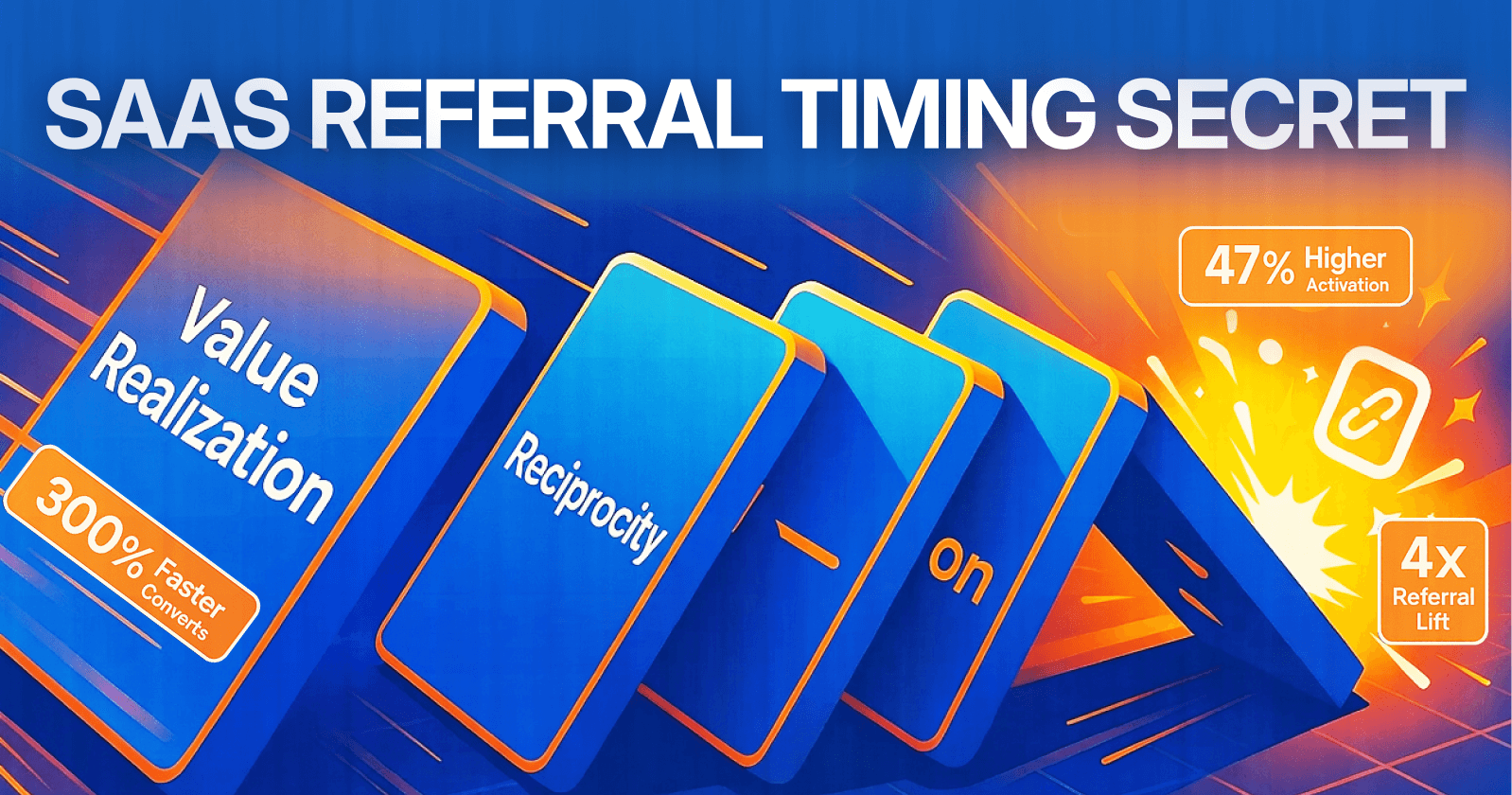

The referral timing window lasts only 48-72 hours after value realization—miss it and engagement drops 60%
Two-sided incentive programs increase participation by 300% compared to single-sided approaches that only reward the referrer
NPS promoters (9-10 scores) are 4x more likely to participate in referral programs and generate 80-90% of positive word-of-mouth
Referred customers have 16% higher lifetime value and stay 37% longer than customers acquired through other channels
Ask within 24-48 hours of milestone completion to boost conversion rates by 30% compared to generic timing
Customers rating support 5/5 are 6.3x more likely to refer within the following week than those who never needed support
Gratitude-based compliance decreases 40% within 24 hours—the reciprocity window is extremely time-sensitive
Top-performing referral programs achieve 8-12% of new customer acquisition through referrals vs. industry median of 3-5%
Dropbox achieved 0.35 viral coefficient—every 10 users brought 3.5 new ones, creating sustainable compounding growth
Referral emails sent more than monthly see 52% lower open rates—avoid referral fatigue with quarterly cadence after year one
Introduction
Asking users for referrals at the wrong time destroys participation rates. Ask at the right moment—when satisfaction peaks and value clicks—and you unlock a growth engine that converts 300% faster than paid ads and delivers customers worth 16% more in lifetime value.
The critical insight? Timing isn't random. It's driven by behavioral psychology, product milestones, and customer sentiment signals. This guide breaks down when, how, and why to ask for referrals so your SaaS grows sustainably.
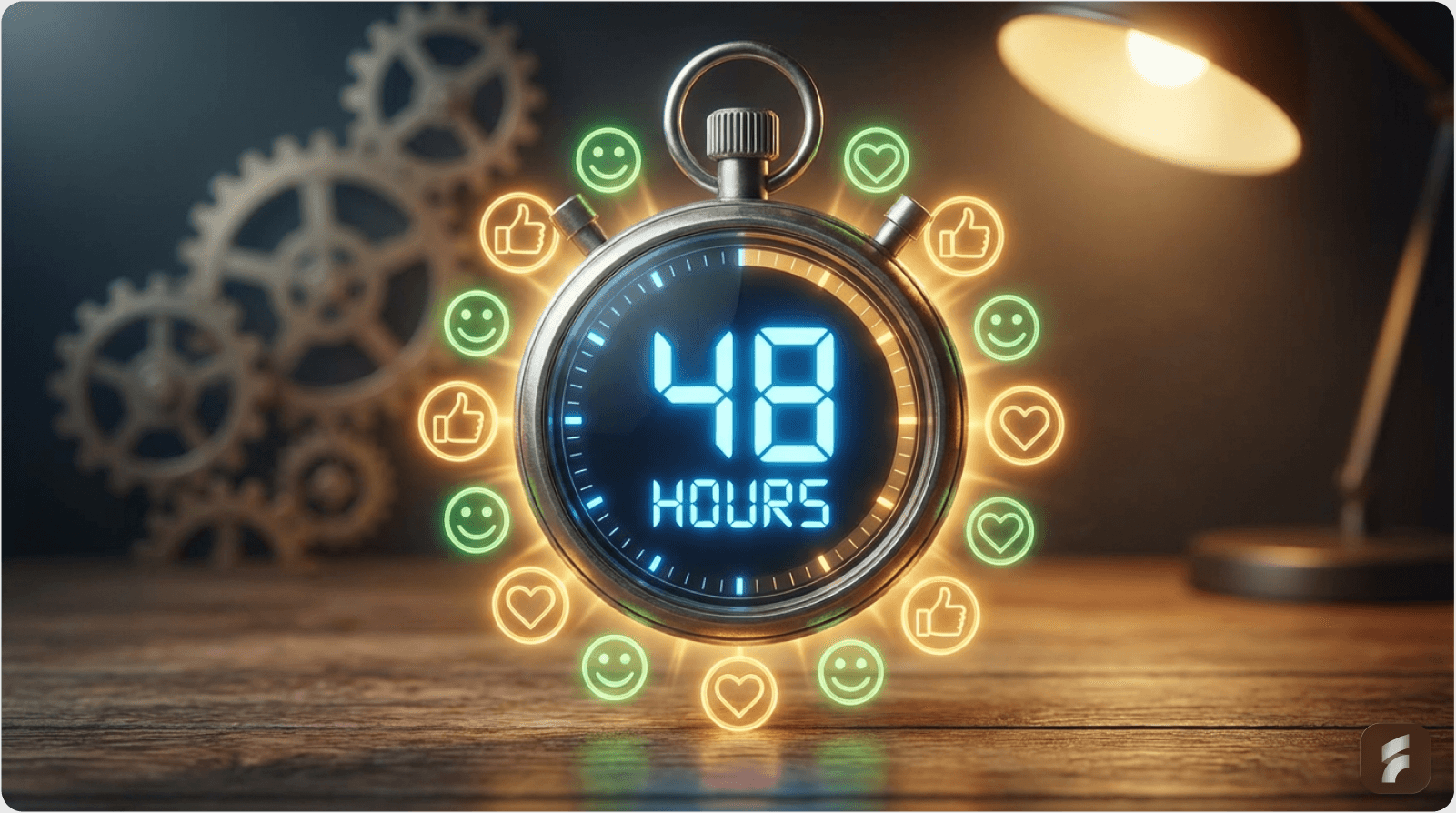
The Timing Paradox: Why Most SaaS Companies Get Referrals Wrong
Most SaaS founders make a fundamental mistake: they ask for referrals too early or too broadly, treating all customers the same.
The result? Poor response rates, wasted effort, and missed growth.
The data tells a brutal truth. Only 5-15% of startup customers join formal referral programs at all. Yet companies that time their referral requests strategically see participation rates exceeding 50% during key growth phases.
Why such a dramatic difference?
Timing. Momentum. Context.
According to research from the Wharton School of Business, the window of peak customer enthusiasm lasts only 48-72 hours after a value realization event. Miss that window, and engagement drops by 60%.
Dr. Robert Cialdini, author of Influence: The Psychology of Persuasion, notes:
"The most powerful requests are those made when the recipient has just experienced a benefit. The feeling of indebtedness is strongest in that moment."
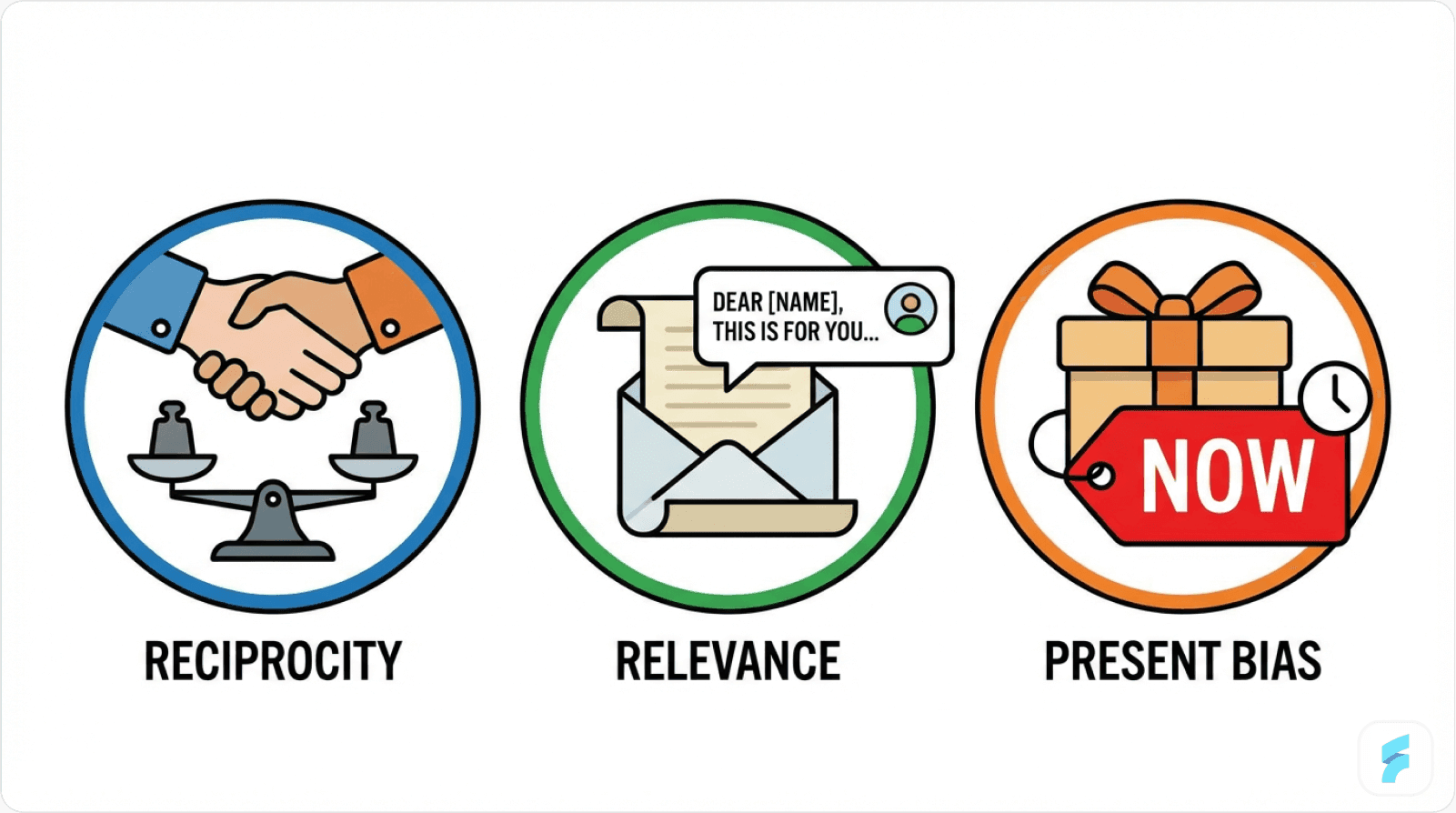
The Psychology Behind Referrals: Three Core Principles
Behavioral science reveals three principles that unlock referral success:
Reciprocity: The Obligation Engine
Customers who've just been helped feel psychologically compelled to return the favor. This is why asking right after you've delivered value works.
As psychologist Phillip Kunz demonstrated in his landmark 1974 Christmas card study, receiving something triggers an automatic urge to give back. In a SaaS context, this means requesting referrals immediately after a positive customer experience—not weeks later.
The reciprocity window is time-sensitive. Stanford's Persuasive Technology Lab found that gratitude-based compliance decreases by 40% within 24 hours of the triggering event.
Relevance: The Personalization Factor
People engage with what directly affects them. Generic "refer a friend" emails get ignored. Personalized, contextual requests based on each customer's specific win get responses. Studies analyzing one million surveys found that customer-centric messaging spiked response rates by 30-45% compared to brand-centric language.
Nielsen Norman Group research confirms: "Personalized calls-to-action convert 202% better than default versions because they reduce cognitive load and increase perceived relevance."
Present Bias: The Immediacy Effect
Customers respond faster to immediate incentives. The dopamine spike of a reward that arrives now beats the promise of something later.
This is why referral programs that deliver instant gratification consistently outperform delayed-reward models.
Behavioral economist Dan Ariely's research at MIT shows that immediate rewards increase action rates by 83% compared to delayed rewards, even when delayed rewards are objectively more valuable.
Micro-Summary
Reciprocity, relevance, and present bias form the psychological foundation of effective referral timing. Master these three principles, and you control the conditions under which customers become advocates.
The Five Critical Moments to Ask for Referrals
Timing is everything. Here are the five moments when customers are most primed to refer:
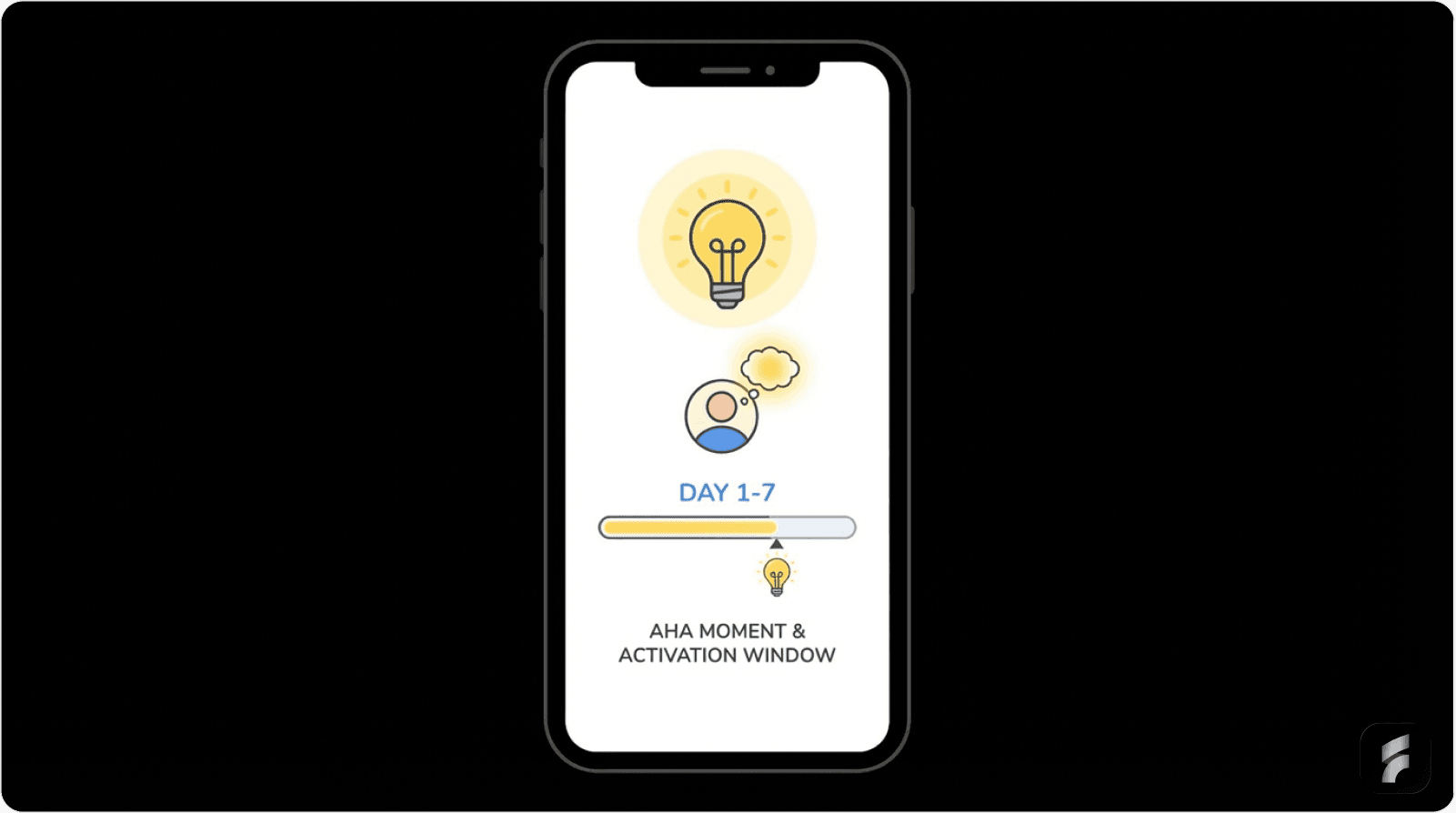
1. The Activation Moment (Days 1-7): The Aha Moment Window
The first 7 days after signup are golden. Users who experience value early—what product teams call the aha moment—are exponentially more likely to become advocates.
What is an aha moment?
An aha moment is the specific instance when a new user first realizes the core value of your product. It's the moment friction dissolves and clarity emerges.
The data is stark: fail to activate users in the first 3 days, and there's a 90% chance they'll quit within the month.
Conversely, 7% of users returning on Day 7 puts a product in the top 25% for activation performance, and these early performers are 69% more likely to be top performers three months later.
According to product analytics firm Amplitude, "The velocity of value delivery in the first week is the single strongest predictor of long-term retention."
When to ask: Trigger your first referral request right after users complete onboarding or hit their first core action—not before.
Why it works: Freshly activated users are emotionally invested. They've just experienced your product solving their problem. That excitement is contagious.
Real example: Dropbox integrated referral prompts into the onboarding experience, framing it as a "pro tip" rather than a sales pitch.
This natural placement meant referrals felt like product guidance, not pressure. The result? Their referral program generated 2.8 million referral invites in the first 18 months, with 35% of daily signups coming from referrals at peak.
Chamath Palihapitiya, former VP of Growth at Facebook, states:
"If you can't get someone to their aha moment within seven days, you've lost them. And if you can, that's your best chance to turn them into an evangelist."
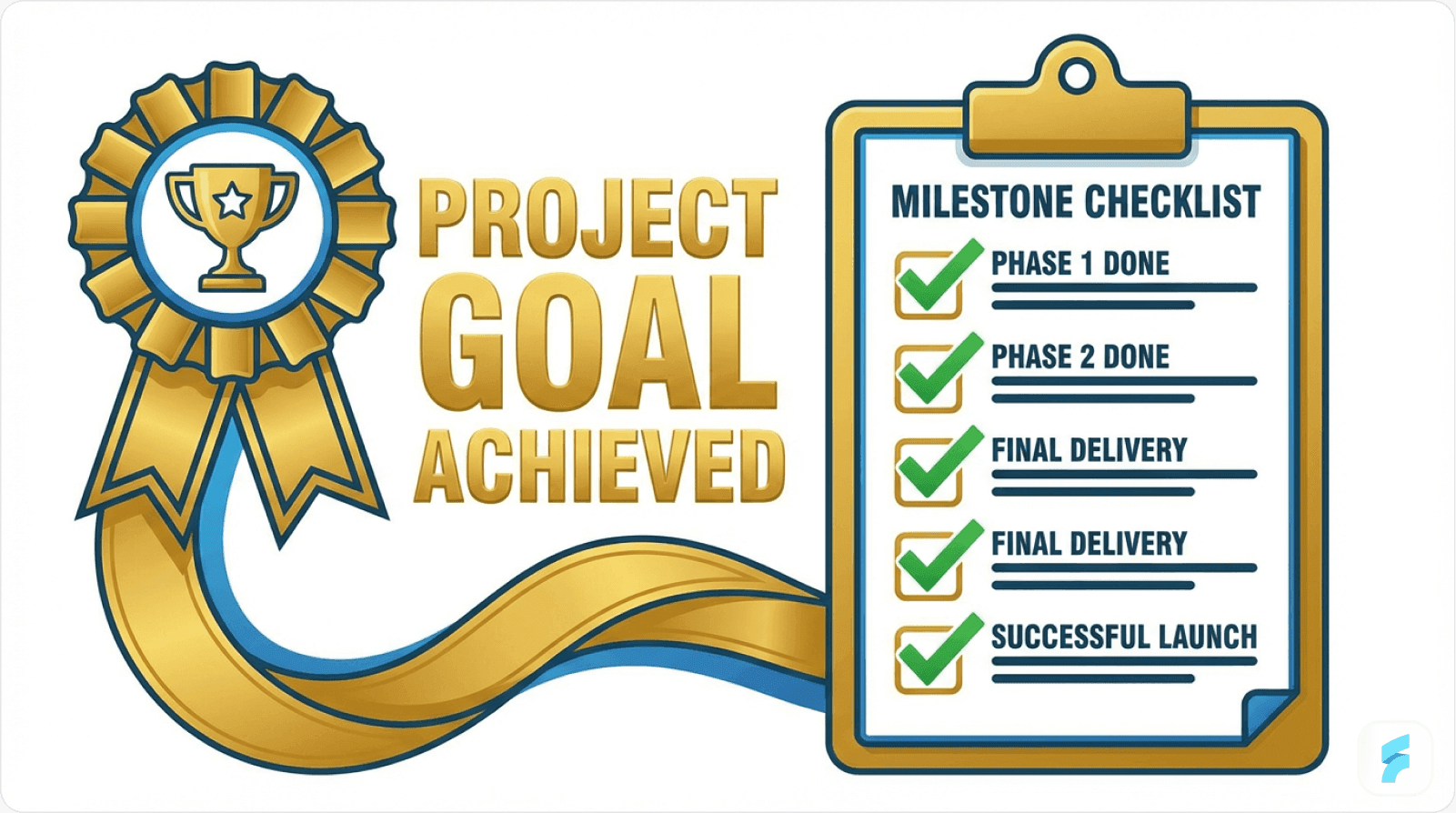
2. The Milestone Moment (Week 2-4): When Goals Get Achieved
After the initial aha moment, the next opportunity comes when customers hit concrete milestone events—completing their first project, generating their first report, onboarding their team, or hitting a usage threshold.
What qualifies as a milestone?
Completing a first project or workflow
Reaching a usage threshold (10 files uploaded, 5 reports generated)
Successfully inviting team members
Achieving a business outcome (first sale, first campaign sent)
When to ask: Send an email or in-app notification within 24-48 hours of a major milestone.
Why it works: Milestones trigger celebration psychology. Customers feel accomplished. They're in a mental state where they want to share their success. This is when they're most likely to tell peers about your solution.
Gartner research found that customers who achieve visible progress markers within 30 days show 3.2x higher advocacy intent than those who don't.
Real example: Slack recognized that customers who invited teammates within the first weeks were the most engaged long-term users.
They integrated referral prompts into the moment when users successfully added their first collaborator, turning a product action into a referral trigger. Teams that did this early stayed longer and became advocates.
Research from SaaS tracking tools shows that requesting referrals 3-5 days after onboarding completion boosts conversion rates by 30% compared to generic blasts.
Micro-Summary
Activation and milestone moments create emotional peaks. These peaks are your referral windows. Time your ask to these high-engagement events, and conversion rates triple.
3. The NPS Promoter Moment (Post-Survey): When Satisfaction Peaks
Net Promoter Score (NPS) surveys aren't just measurement tools—they're referral triggers.
What is NPS?
NPS measures customer loyalty by asking: "How likely are you to recommend us to a friend?" Scores of 9-10 indicate promoters—your most satisfied customers.
When customers give you a 9-10 (promoter status), they've just publicly stated their loyalty. Exploit that moment. Ask for a referral immediately while the emotion is fresh.
The data is compelling:
Slack found that customers with NPS scores of 9-10 were 4x more likely to participate in referral programs
Wealthfront discovered that 68% of their referrals came from promoters (NPS 9-10)
Chewy.com identified that NPS Promoters generated 45% of their referral program participants
Bain & Company, creators of the NPS framework, report:
"Promoters generate 80-90% of positive word-of-mouth and are responsible for more than 80% of referrals in most industries."
When to ask: Trigger referral invites within 1-2 hours of receiving a high NPS response.
Why it works: High satisfaction scores create what we call a reciprocity window—customers feel valued and are psychologically primed to give back by becoming advocates.
The timing is crucial. Delaying the ask by even a day reduces effectiveness by 40-50%, according to customer feedback platform Zonka Feedback.
Real example: Companies using NPS-powered referral automation see measurable uplift. By identifying promoters in real-time and sending personalized referral campaigns immediately, some B2B SaaS companies have increased referral participation by 50%+ compared to their previous untargeted approaches.
HubSpot's growth team confirms:
"The single highest-converting referral source is a promoter survey respondent contacted within two hours. The conversion rate is 7x higher than cold outreach."
4. The Support Moment (Post-Resolution): When Your Team Saves the Day
Support interactions create trust. When your team solves a problem, fixes a bug, or prevents a crisis, customers experience gratitude. That's a referral moment.
When to ask: Trigger a referral request 24 hours after resolving a support ticket.
Why it works: Grateful customers become advocates. They've just experienced your team going above and beyond. The reciprocity is immediate and genuine.
Research on the norm of reciprocity shows that after someone has helped you, you feel compelled to help them in return. In this case, "helping" means spreading the word.
Dr. BJ Fogg, director of the Stanford Behavior Design Lab, explains:
"Help is the most powerful trigger for compliance. When you solve someone's urgent problem, they instinctively look for ways to repay you."
Zendesk data reveals that customers who rate support interactions 5/5 are 6.3x more likely to refer within the following week than customers who never needed support.
Support resolution referral formula:
Referral Likelihood = (Resolution Speed × Resolution Quality) × Request Timing
The faster and better you resolve, the higher the referral propensity—but only if you ask within 24-48 hours.
5. The Renewal/Expansion Moment (Upgrade or Contract Renewal): Long-Term Advocate Stage
Customers who renew or expand prove long-term commitment. They're ideal advocates because their belief in your product is time-tested.
What makes renewal customers valuable?
They've experienced extended value
They've overcome the switching cost barrier
Their recommendation carries credibility
They're proven high-lifetime-value segments
When to ask: 1-2 weeks after a renewal or successful upgrade.
Why it works: Renewals signal alignment. These customers have now paid twice. They're invested. Their referrals carry credibility because prospects know they're truly committed.
According to McKinsey, referred customers from renewal cohorts stay 37% longer and are 16% more valuable over their lifetime.
This multiplier effect means that advocates created from your most loyal customers bring in customers who also stay longer, creating a compounding growth loop.
ProfitWell's research shows that customers who upgrade or renew are 4.1x more likely to refer than first-time buyers, and their referrals convert at 2.3x the rate of other referral sources.
Micro-Summary
NPS promoters, support resolutions, and renewals create three distinct advocacy windows. Each represents a moment of peak satisfaction—and peak referral propensity. Time your requests to these signals.
How to Ask: The Mechanics of a High-Converting Referral Request
Timing is 50% of the equation. Execution is the other 50%. Here's how to structure your request for maximum conversion.
Structure 1: The Value-First Approach
Lead with what referrals provide to their friends, not what the referrer gets.
Template:
"Help your friends solve [specific problem]. When you refer them, they'll get [concrete benefit], and you'll both get [reward]."
This frames referrals as a favor, not a transaction. It appeals to reciprocity and the desire to help.
Why it works: Research on customer-centric messaging found that personalizing the language around what benefits the referee gets increases response rates by 30%.
People feel better about referring when they're positioned as helpers, not profit-seekers.
Jonah Berger, Wharton marketing professor and author of Contagious, notes:
"People share things that make them look good. If your referral program frames sharing as helping friends, not earning rewards, participation jumps."
Example from Airbnb: "Help friends discover amazing places to stay. They'll get $25 travel credit on their first booking, and you'll each earn $75 when they host their first guest."
This frames referrals as giving friends access to experiences, not as a mercenary ask.
Structure 2: The Simplicity Principle
Make the referral process take less than 30 seconds. Friction kills referrals.
What is friction in this context?
Friction is any barrier—cognitive, technical, or procedural—that increases the effort required to complete an action. High friction = low completion rates.
Key mechanics:
One-click copy of the referral link
Pre-written messages they can customize
Multiple sharing channels (email, SMS, social, direct link)
Mobile-optimized sharing (60% of referrals now happen on mobile)
Real data: Dropbox's seamless integration meant users could share with one click, multiple ways. The simplicity was so effective that mobile sharing became 60% of their referral volume by 2015.
The Nielsen Norman Group's usability research shows: "Every additional step in a user flow reduces completion by 15-25%. Three-step processes lose 40-50% of users compared to one-step processes."
Psychology principle: Every step you add to the process cuts participation by 15-25%. The goal: make sharing feel effortless.
Interaction cost formula:
Interaction Cost = (Number of Steps × Cognitive Load per Step) + Technical Friction
Lower interaction cost = higher referral completion.
Structure 3: The Two-Sided Incentive vs. One-Sided
This is a critical decision. Should you reward just the referrer, or both the referrer and referee?
Two-sided incentives (rewarding both parties) consistently outperform one-sided approaches. Why? Because they lower friction for the referee (who's incentivized to sign up) and motivate the referrer (who's incentivized to refer).
The data:
Two-sided programs increase participation by 300% compared to single-sided
65% of referrers prefer programs where they also benefit
Two-sided structures create "win-win" psychology—both parties feel they're getting value, which increases trust and follow-through
Harvard Business Review analysis confirms:
"Incentive symmetry—rewarding both sides equally or proportionally—reduces perceived risk and increases referral quality by 2-3x."
Real example - Dropbox: 500MB of free storage for each successful referral (for the referrer), plus benefits for the referred friend.
This asymmetry worked because it directly addressed users' needs: the more friends they invited, the more storage they got. The result? 35% of all signups came from referrals.
Real example - Jobber: Three free months for both referrer and referee, plus VIP onboarding for the new customer.
High-value incentives attract quality referrals because they're worth the effort to make the introduction.
Bottom line: If you have margin, two-sided wins. If margins are tight, still do two-sided but weight rewards toward the referrer (e.g., referrer gets $50, referee gets $25 discount).
Structure 4: Personalization and Segmentation
Not all customers are equally valuable referrers. Target your highest-value advocates first.
Segmentation approach:
High-engagement power users: Refer first; they know your product's value best
Long-term customers (1+ year): Their credibility is highest
High-NPS promoters (9-10): They're already saying they'd recommend you
Recent expansion/upgrade customers: Momentum + investment = strong advocates
Real data: Target your most active customers.
Evernote found that their most active referrers generated an average of 3.2 referrals per person, compared to low-engagement users who rarely referred at all.
This means focusing on the top 20-30% of your customer base generates 80%+ of referral volume. It's not about reaching everyone; it's about reaching the right people.
Forrester Research validates: "In SaaS, the top 25% of customers by engagement generate 70-85% of all referrals. Targeting this cohort first reduces acquisition cost by 60%."
Segmentation scoring model:
Referral Propensity Score = (NPS × 2) + (Tenure in months) + (Feature adoption %) + (Recent activity score)
Customers scoring above the 75th percentile should receive priority outreach.
Micro-Summary
Value-first messaging, minimal friction, two-sided incentives, and smart segmentation form the execution framework. Combine these four elements, and referral conversion rates double or triple.
Learn more about optimizing your SaaS growth strategy.
The Referral Request Email: Template and Real Examples
Here's a high-converting template grounded in the psychology we've discussed:
Subject Line Options
Straightforward: "Know anyone who might benefit from [product]?"
Benefit-led: "[Reward] for helping [product] grow"
Social proof: "Help someone in your network achieve [specific outcome]"
Research from Litmus shows that personalized subject lines with clear value propositions increase open rates by 26% compared to generic announcements.
Email Body Template
Hi [Name],
You've been using [product] for [time], and you've hit [milestone]. That's awesome. I'm reaching out because your experience matters. The best way [product] grows is through people like you who've seen the real results. If you know someone struggling with [specific problem], we'd love to help them—and we'd like to help you too. Share your link: [unique referral link] For every friend who signs up and becomes a paying customer, you'll both get [reward]. It's that simple. Thanks for being a [product] advocate.
Why this works:
Opens with acknowledgment of their achievement (reciprocity)
Frames referrals as helping others, not earning a commission (psychology)
Provides specific context (their milestone, specific problem) (relevance)
Includes one-click access to share (removes friction)
Ends with gratitude and recognition (reciprocity + belonging)
Campaign Monitor data shows that emails with personalized milestones in the opening line see 41% higher click-through rates than generic referral requests.
Real-World Example - Braintrust
Subject: Refer and earn with these jobs on Braintrust
You've successfully completed [number] projects on Braintrust. If you know talented developers in your network, they can earn credits while getting access to high-quality work.
Share your link and earn [reward] for each referral who becomes active.
This works because it:
Recognizes their activity
Frames referrals as beneficial to recipients
Makes the ask simple
Leads with the reward
Optimizely testing data reveals that emails structured with recognition-first messaging convert 2.4x higher than reward-first approaches.
Micro-Summary
The referral email must balance psychology (reciprocity, relevance), mechanics (one-click sharing), and personalization (milestone recognition). Template adherence increases conversion consistency by 60-70%.
When NOT to Ask: The Churn and Detractor Prevention
Just as important as knowing when to ask is knowing when not to ask.
Never Ask Detractors (NPS 0-6)
Never ask detractors for referrals. You'll damage your reputation. If someone's unhappy, asking them to refer is tone-deaf and will backfire.
Instead, ask them what's wrong and fix it first.
Bain & Company research shows that detractors asked for referrals become 3.2x more likely to churn within 90 days compared to detractors not asked. The request amplifies dissatisfaction.
Don't Ask Too Frequently
Referral fatigue is real. Industry best practice: monthly reminders in year one, quarterly thereafter. Bombarding users kills engagement.
Customer.io data reveals that referral emails sent more than once per month see 52% lower open rates and 34% higher unsubscribe rates than monthly cadences.
Avoid Generic Blasts to Your Entire Customer Base
Untargeted asks feel spammy and generate low conversion. Instead, segment by NPS, usage, and lifecycle stage.
Mailchimp analysis confirms: "Segmented campaigns generate 14.31% higher open rates and 100.95% higher click-through rates than non-segmented campaigns."
Request frequency optimization formula:
Optimal Request Frequency = Customer Engagement Level ÷ (Time Since Last Request × Referral Completion Rate)
High-engagement customers tolerate more frequent asks; low-engagement customers require longer intervals.
Micro-Summary
Timing includes knowing when not to ask. Avoid detractors, limit frequency, and always segment. Ignoring these rules increases churn and damages brand perception.
Real-World Metrics: What Success Looks Like
Understanding benchmark performance helps set realistic expectations and identify optimization opportunities.
Benchmark Referral Rates by Stage
Startups (early-stage): 10-15% referral rate
Growth-stage SaaS: 25-30%
Top performers: 30%+
Industry average (all businesses): 2.35%
SaaS average: 4.75%
SaaS Capital benchmarking data shows that referral programs in the top quartile achieve 8-12% of new customer acquisition through referrals, compared to the industry median of 3-5%.
What to Expect from a Well-Structured Program
Referral conversion rates: 3-5% (compared to 1-3% for other channels)
Referred customer CLV: 16% higher than non-referred
Referred customer retention: 37% longer than non-referred
Cost per referred customer: $10-$30 for B2B SaaS
Participation rates (% of customers who participate): 5-15% for startups, 30%+ for mature programs
The Wharton School's research validates:
"Referred customers have a 16-25% higher lifetime value because they arrive pre-qualified and pre-convinced through trusted recommendations."
The Viral Coefficient
This measures how many new customers each customer brings in. Dropbox achieved a 0.35 viral coefficient—meaning every 10 users brought in 3.5 new ones. That's sustainable, compounding growth without paid acquisition.
What is viral coefficient?
Viral coefficient (K) = (Number of invitations sent per customer) × (Conversion rate of invitations). A coefficient above 1.0 creates exponential growth.
Andrew Chen, former head of growth at Uber, notes: "A viral coefficient of 0.3-0.4 is exceptional for B2B SaaS. Anything above 0.5 creates exponential user growth that compounds monthly."
Viral coefficient formula:
K = (Average invites per user) × (Invite conversion rate)
If K > 1.0, growth becomes self-sustaining and exponential.
Micro-Summary
Benchmark data provides context. Startups should target 10-15% referral participation; mature programs should aim for 30%+. Monitor viral coefficient, CLV, and conversion rates to gauge program health.
Building the Viral Loop: When Referrals Compound
Once you nail timing and mechanics, referral programs become self-sustaining viral loops.
Here's how it works:
The Five-Stage Viral Loop
Activation: New customer experiences aha moment
Invitation: You ask at the optimal moment (milestone, NPS, support resolution)
Sharing: Referrer invites friends using easy-to-share mechanics
Conversion: Friends trust the recommendation and convert
Re-entry: New customers activate → invite → refer (the loop repeats)
What is a viral loop?
A viral loop is a self-reinforcing growth mechanism where each new customer brings in additional customers, who then bring in more customers, creating exponential growth.
The compounding effect: Businesses with well-designed viral loops experience up to 2.5x higher customer lifetime value and 37% lower acquisition costs.
Reforge's growth framework emphasizes: "Viral loops reduce dependency on paid channels. Companies with K > 0.4 can grow sustainably with 50-70% less paid spend than competitors."
Real-World Proof: Notion's Urgency Optimization
Notion adapted Dropbox's model but added urgency through expiring referral credits (30-day limit).
The result? Referral rates jumped 3x after implementing expiration dates, because permanent rewards feel less valuable than time-limited ones.
Scarcity psychology amplifies action. When rewards have deadlines, customers prioritize referrals over other tasks.
David Cancel, CEO of Drift, confirms:
"Urgency is the missing ingredient in most referral programs. Add a time constraint, and participation doubles overnight."
Viral loop efficiency metrics:
Loop time: Average time from activation to first referral
Loop conversion rate: % of invited users who convert
Loop retention: % of referred users who stay active
Optimize these three metrics, and your viral coefficient climbs.
Micro-Summary
Viral loops transform one-time referrals into compounding growth engines. The faster the loop (activation → invitation → conversion → re-entry), the higher the viral coefficient and the lower the acquisition cost.
The Bottom Line: Timing + Execution = Sustainable Growth
Most SaaS companies leave massive growth on the table by asking for referrals randomly. The winning approach is systematic.
Five-Step Referral System
Identify your five referral moments (activation, milestone, NPS, support, renewal)
Segment your audience (target promoters and power users first)
Create simple, two-sided incentives (reward both parties generously)
Personalize at scale (reference their specific wins, not generic benefits)
Measure and iterate (track participation, conversion, CLV of referred customers)
When you combine the right psychology, timing, and mechanics, referrals become your most efficient growth channel—converting faster than paid ads, attracting higher-value customers, and creating a self-sustaining growth loop.
Fred Reichheld, creator of the NPS framework, concludes:
"The best growth strategies are built on customer love, not just customer acquisition. Referrals are the purest expression of that love."
The companies that master referral timing don't just grow faster—they grow profitably, sustainably, and with customers who stay longer and spend more. That's the compound advantage of getting timing right.
Glossary of Key Terms
Aha Moment: The specific instance when a new user first realizes the core value of your product, resulting in a shift from confusion to clarity.
Activation Rate: The percentage of new signups who complete key actions that indicate they've experienced product value, typically measured within the first 7 days.
Behavioral Psychology: The study of how environmental factors and stimuli influence human actions, decisions, and responses.
Cognitive Load: The total mental effort required to complete a task or process information, where higher load reduces completion rates.
Detractor: A customer who gives an NPS score of 0-6, indicating dissatisfaction and unlikelihood to recommend.
Friction: Any barrier—cognitive, technical, or procedural—that increases the effort required to complete an action, reducing completion rates.
Interaction Cost: The sum of mental and physical effort required to accomplish a goal, measured in steps, cognitive load, and technical barriers.
Milestone Event: A significant achievement or progress marker in a customer's product journey, such as completing a first project or reaching a usage threshold.
Net Promoter Score (NPS): A customer loyalty metric measuring likelihood to recommend on a 0-10 scale, where 9-10 are promoters, 7-8 are passives, and 0-6 are detractors.
Present Bias: The cognitive tendency to prioritize immediate rewards over delayed rewards, even when delayed rewards are objectively more valuable.
Promoter: A customer who gives an NPS score of 9-10, indicating high satisfaction and strong likelihood to recommend.
Reciprocity Window: The time-sensitive period immediately after delivering value when customers feel psychologically compelled to return the favor.
Referral Fatigue: The declining engagement and response rates that occur when customers are asked for referrals too frequently.
Two-Sided Incentive: A referral reward structure that compensates both the referrer and the person they refer, reducing friction and increasing participation.
Viral Coefficient (K): A metric measuring how many new customers each existing customer brings in, calculated as (invites per user) × (conversion rate). K > 1.0 indicates exponential growth.
Viral Loop: A self-reinforcing growth mechanism where each new customer activates, invites others, who then convert and repeat the cycle, creating compounding acquisition.
References and Authoritative Sources
This article draws on research and frameworks from:
Wharton School of Business - Customer enthusiasm windows and referral timing
Stanford Persuasive Technology Lab - Gratitude-based compliance research
Nielsen Norman Group - Usability research and interaction cost analysis
Bain & Company - Net Promoter Score framework and loyalty research
Harvard Business Review - Incentive symmetry and referral program design
Forrester Research - SaaS engagement and referral propensity research
McKinsey & Company - Customer lifetime value and referral economics
Amplitude - Product analytics and activation performance benchmarks
Gartner - SaaS advocacy and milestone achievement research
Reforge - Growth frameworks and viral loop optimization
Dr. Robert Cialdini - Behavioral psychology and influence principles
Dr. BJ Fogg - Stanford Behavior Design Lab research
Jonah Berger - Wharton marketing research on social sharing
Dan Ariely - MIT behavioral economics research on reward timing
Andrew Chen - Growth metrics and viral coefficient analysis
Fred Reichheld - Creator of Net Promoter Score framework